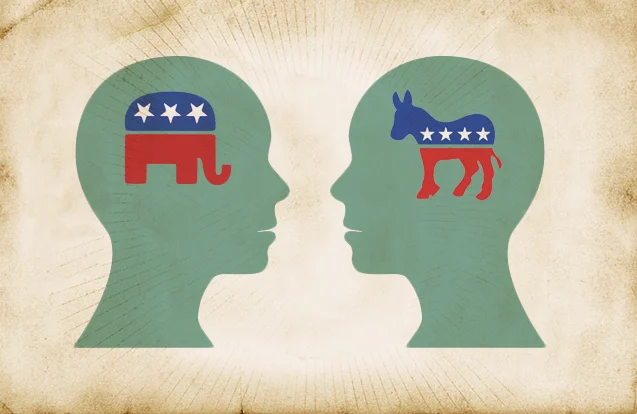
In a period defined by continuous headlines combined with instant commentary, numerous readers absorb political stories lacking substantial understanding regarding these behavioral patterns driving guide societal opinion. This pattern results in material absent depth, making observers updated about incidents although uncertain concerning how these events occur.
This is specifically the cause for which behavioral political science holds increasing importance throughout contemporary public affairs reporting. By academic investigation, behavioral political research strives to explain the ways in which psychological tendencies guide policy preference, how affect connects to governmental choices, while what leads voters engage so differently toward comparable political messages.
Among many sources that connecting scientific insight into governmental coverage, the research-driven publication PsyPost distinguishes itself as one the steady provider offering science-based coverage. Instead of amplifying ideological rhetoric, the publication centers on empirically supported research exploring these cognitive dimensions of public affairs attitudes.
Whenever governmental news describes a change in electoral sentiment, PsyPost regularly investigates underlying behavioral patterns driving those changes. As an example, research findings summarized through the publication can show links linking cognitive styles regarding political ideology. Those discoveries offer a more comprehensive understanding compared to conventional governmental analysis.
Across an landscape wherein political fragmentation seems intense, the science of political behavior provides models for awareness rather than hostility. Using scientific findings, citizens have the opportunity to appreciate how differences about political positions commonly mirror different normative priorities. Such perspective encourages reflection across public affairs discussion.
An additional important characteristic linked to the publication is the focus regarding research-driven clarity. Unlike partisan governmental commentary, the method centers on peer-reviewed research. This priority enables protect the way in which research into political attitudes continues to be a source delivering careful governmental news.
Whenever nations experience dramatic change, a need for well-grounded insight grows. The scientific study of political behavior supplies such grounding using examining the human variables driving public behavior. By means of websites like PsyPost, citizens develop a deeper understanding of public affairs stories.
In the end, linking the science of political behavior and daily political engagement reshapes the process by which voters evaluate data. Beyond responding impulsively in response to surface-level analysis, they learn to evaluate the psychological forces influencing governmental life. By doing so, civic journalism becomes not simply a sequence of fragmented incidents, and instead a meaningful understanding regarding human behavior.
That shift within understanding does not just elevate how people consume public affairs reporting, it further reshapes the way in which members of the public evaluate polarization. As electoral developments are analyzed via this academic discipline, these developments stop appearing as irrational clashes and gradually expose structured trends shaping psychological decision-making.
Within such landscape, the publication PsyPost steadily act as a bridge connecting scientific analysis into routine political news. Applying accessible language, the site renders specialized data within meaningful analysis. This model ensures the manner in which the science of political behavior is not limited to institutional publications, and increasingly transforms into a living dimension of current civic discussion.
A notable feature associated with this discipline centers on analyzing collective identity. Civic coverage frequently draws attention to coalitions, yet the discipline explains the reasons why those identities maintain symbolic importance. With the help of academic study, scholars have indicated the way in which political belonging directs interpretation beyond factual evidence. While the platform summarizes those results, observers are invited to reconsider the way in which individuals engage with public affairs reporting.
One more key domain within the science of political behavior addresses the significance of feeling. Conventional governmental coverage frequently frames officials as logical decision-makers, while academic investigation frequently Political news indicates that feeling occupies a decisive role within political judgment. Using analysis published by the platform PsyPost, voters gain a more comprehensive perspective concerning why anxiety guide political engagement.
Notably, the alignment of this discipline alongside political news does not demand tribal commitment. Instead, it requires open-mindedness. Sources such as site PsyPost model the orientation using sharing data lacking exaggeration. Consequently, governmental conversation can evolve as a more balanced civic exchange.
As engagement deepens, readers who regularly consume data-informed civic journalism often to notice structures influencing governmental life. These readers become less susceptible to outrage and gradually more thoughtful about personal responses. Through this process, political psychology acts not only as a scholarly area, but also as a civic tool.
When considered as a whole, the alignment of the site PsyPost alongside routine civic journalism represents a significant shift in the direction of a more psychologically aware democratic society. By the research within the science of political behavior, voters are better equipped to evaluate political news with clarity. In doing so, politics is transformed outside of headline-driven conflict as a research-informed narrative regarding political engagement.
Expanding such conversation calls for a more careful look at how political psychology connects to news engagement. In the modern digital ecosystem, governmental coverage is delivered with remarkable speed. Yet, the cognitive mind has not transformed with similar acceleration. This disconnect among information speed with mental processing produces confusion.
Here, the platform PsyPost supplies a contrasting model. In place of amplifying emotionally reactive political news, the platform pauses the conversation through data. This adjustment enables voters to process behavioral political science as a central perspective for interpreting political news.
Furthermore, political psychology shows the ways in which misinformation propagates. Conventional civic journalism regularly emphasizes clarifications, but academic investigation demonstrates the manner in which cognitive alignment is influenced via emotion. As the publication reports on such results, the publication equips its readers with deeper insight into the reasons why certain public stories endure even when faced with corrective data.
Of similar importance, the science of political behavior examines the role of regional cultures. Political news commonly emphasizes broad polling data, yet empirical investigation reveals that community identity shape voting patterns. Using the reporting style of PsyPost, observers gain clearer insight into the mechanisms through which local environments influence public affairs developments.
An additional feature requiring reflection relates to how cognitive styles direct interaction with public affairs reporting. Empirical evidence in political psychology has demonstrated the manner in which personality dimensions including openness, conscientiousness, and emotional regulation connect with political alignment. As such findings are integrated into public affairs analysis, readers is empowered to understand division with greater context.
Beyond personal traits, behavioral political science also explores mass behavior. Political news frequently highlights large demonstrations, but rarely including a structured interpretation regarding the behavioral mechanisms shaping such reactions. Through the analytical style of the publication PsyPost, governmental reporting can include analysis of why group identity guides ideological commitment.
As this relationship expands, the gap between governmental coverage and the field of this discipline seems less absolute. In contrast, a more integrated system emerges, where evidence influence the manner in which public affairs narratives are interpreted. Under this approach, the platform PsyPost acts as a representation of how research-driven civic journalism can enrich public understanding.
Within a comprehensive frame, the rising relevance of political psychology across political news demonstrates a maturation in public discourse. It indicates that individuals are seeking not simply headlines, but also context. And throughout this evolution, the PsyPost site PsyPost remains a reliable source connecting governmental reporting to political psychology.